What Is a Situationship? Meaning, Signs & Examples Explained
Confused about the term situationship? Learn what a situationship is, how it differs from a relationship, common signs, and why the term has become so popular.
On this page
No headings found.
What Is a Situationship?
If you've spent any time on social media, dating apps, or relationship discussions online, you've probably come across the term "situationship".
It's one of those modern dating words that people use frequently but rarely explain. So what exactly is a situationship, and how is it different from a traditional relationship?
This explainer breaks down the meaning of a situationship in simple terms.
What Is a Situationship?
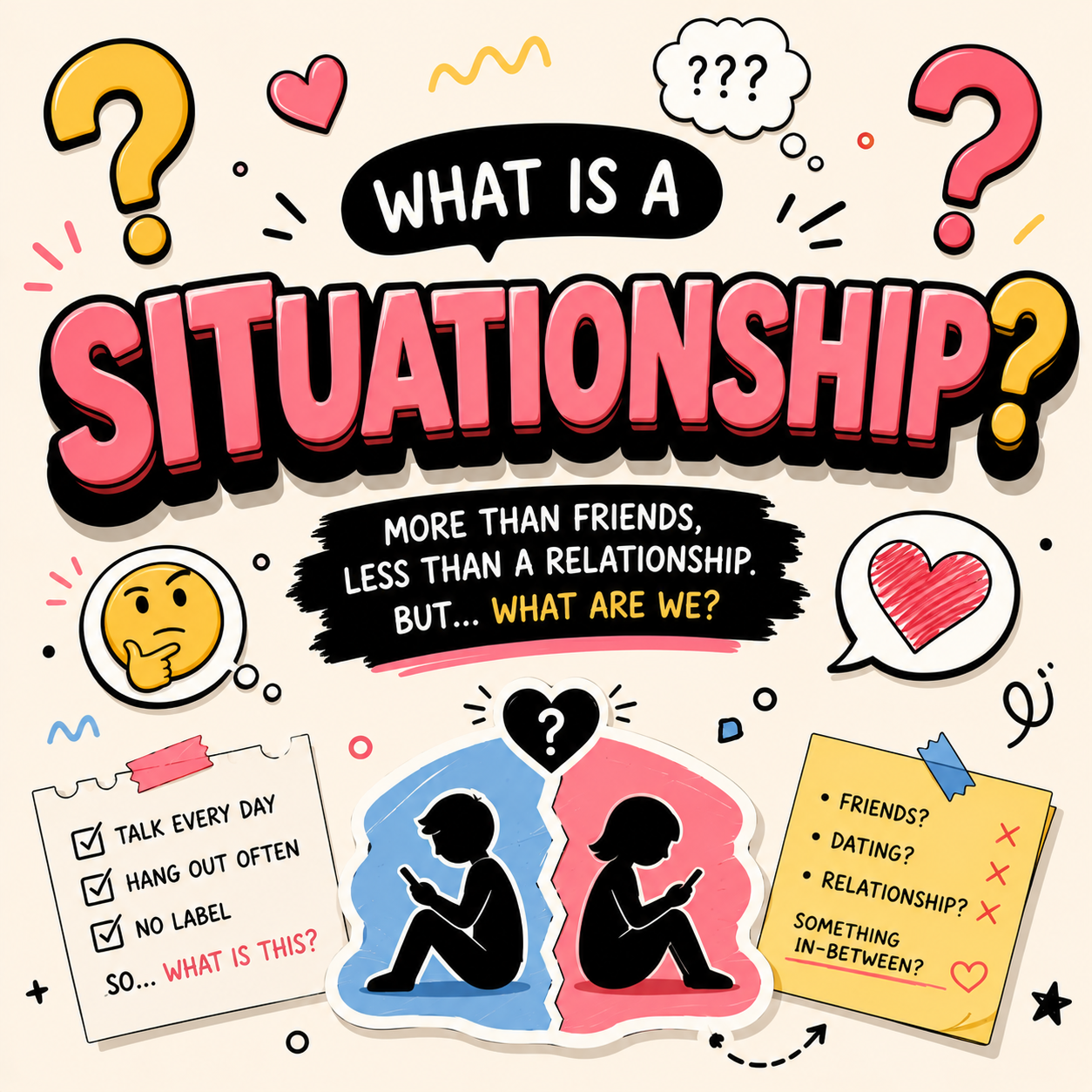
A situationship is a romantic or emotional connection between two people that exists somewhere between casual dating and a committed relationship.
The people involved may spend time together, communicate regularly, and share emotional or physical intimacy, but without clearly defining the relationship.
In simple terms: a situationship is a relationship without a clear label.
Why Is It Called a Situationship?
The term combines the words "situation" and "relationship."
It describes a situation where two people have many aspects of a relationship but haven't officially established what they are to each other.
As a result, the connection often exists in a gray area.
Common Signs of a Situationship
While every situation is different, some common signs include:
- Spending time together regularly
- Emotional or physical intimacy
- No official relationship label
- Unclear expectations about the future
- Avoiding conversations about commitment
Not every situationship looks the same, but uncertainty is usually a defining characteristic.
Situationship vs. Relationship
The main difference is clarity.
- Situationship: Undefined, uncertain, and open-ended
- Relationship: Defined, acknowledged, and mutually understood
In a relationship, both people generally understand where they stand. In a situationship, that understanding may not be clearly communicated.
Situationship = uncertainty. Relationship = clarity.
Why Do People Enter Situationships?
There are many reasons why situationships happen.
- People may not be ready for commitment
- They may still be getting to know each other
- They may have different expectations
- They may enjoy the connection without wanting a formal relationship
Sometimes a situationship develops intentionally, while other times it evolves naturally without discussion.
Are Situationships Good or Bad?
A situationship isn't automatically good or bad.
Some people are comfortable with a flexible, undefined connection. Others may find uncertainty frustrating if they're looking for commitment or long-term stability.
Whether a situationship works often depends on communication and shared expectations.
Why Has the Term Become So Popular?
The rise of dating apps, social media, and modern dating culture has introduced new ways for people to connect.
The word "situationship" gained popularity because it describes a type of connection that many people experience but struggled to name before.
It provides a simple way to describe relationships that don't fit traditional categories.
Quick Summary
A situationship is a romantic or emotional connection that exists between casual dating and a committed relationship.
People in a situationship may share many aspects of a relationship, but without clearly defining what they are to each other.
The key characteristic is a lack of clarity or official commitment.
Wrap Up
The term "situationship" has become a common part of modern dating vocabulary because it captures a type of relationship many people recognize.
While every situationship is different, the defining feature is simple: a meaningful connection without a clearly defined label.
Now that you know what a situationship is, you'll better understand why the term appears so often in conversations about modern relationships and dating culture.