
What Is Love Bombing? Meaning, Signs, Examples & Red Flags Explained
On this page
No headings found.
If you've ever heard someone say, "I think they're love bombing me," you might have wondered what they meant.
The term love bombing has become increasingly common on TikTok, Instagram, YouTube, and relationship discussions online. While grand romantic gestures may seem exciting at first, love bombing refers to something very different.
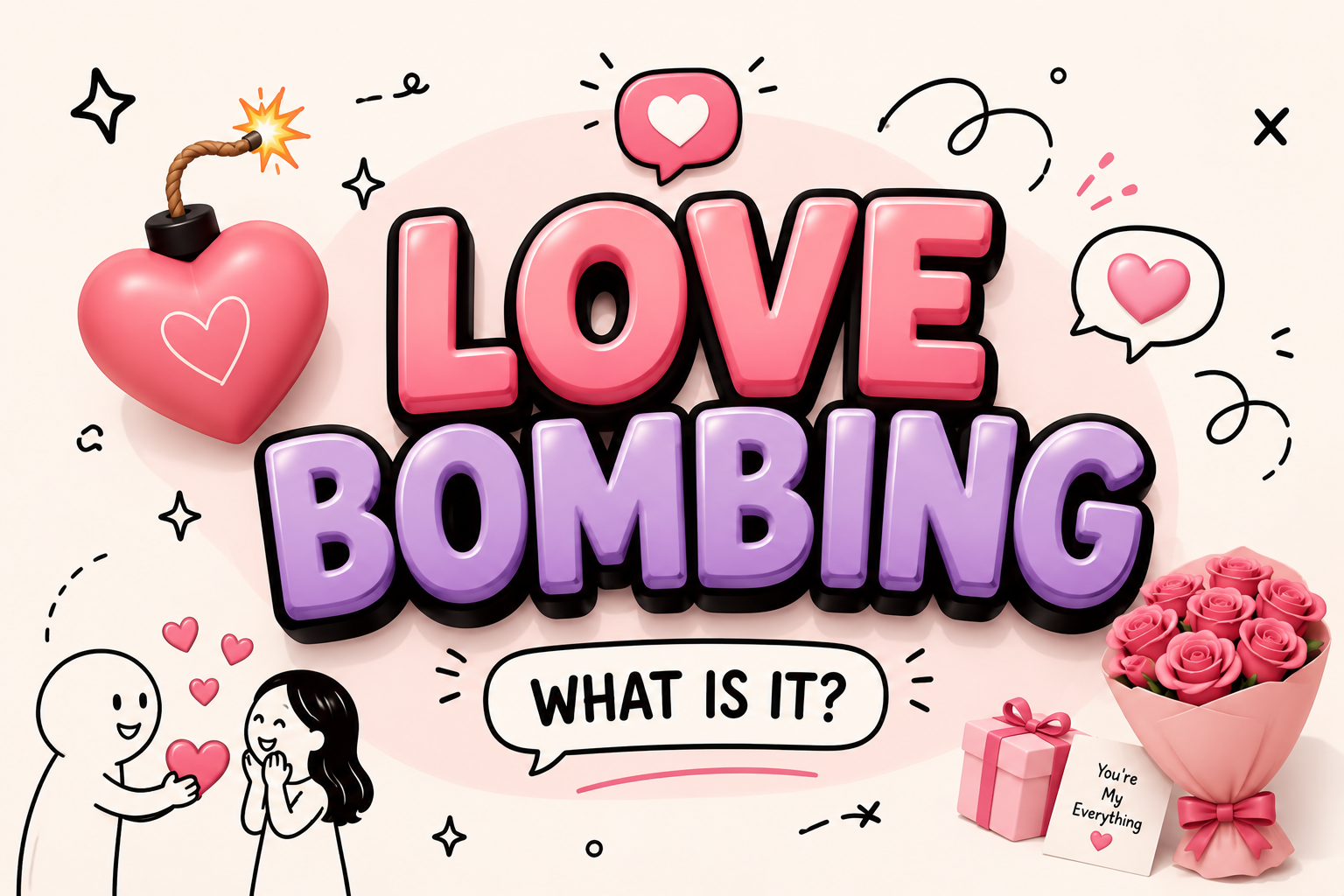
It describes a pattern where someone overwhelms another person with intense affection, compliments, attention, or gifts—often very early in a relationship—to quickly build emotional attachment.
What Is Love Bombing?
Love bombing is a behavior where someone gives excessive attention, affection, compliments, gifts, or promises in order to quickly gain another person's trust, affection, or emotional dependence.
While these actions may appear romantic initially, the attention is often unusually intense and progresses much faster than the relationship itself.
In simple terms: love bombing is overwhelming someone with affection to create a strong emotional attachment very quickly.
What Does Love Bombing Look Like?
Love bombing can look different in every relationship, but some common examples include:
1. Constant Messaging
They text or call throughout the day, expecting immediate replies and constant communication.
2. Overwhelming Compliments
They frequently say things like:
- "You're perfect."
- "I've never met anyone like you."
- "You're my soulmate."
- "We're meant to be."
These statements may happen very early—even after only a few conversations.
3. Expensive Gifts
They buy gifts, flowers, or expensive items before the relationship has naturally developed.
4. Talking About the Future Immediately
Very early conversations may include:
- Living together
- Marriage
- Children
- Travel plans months ahead
The relationship begins moving unusually fast.
Common Signs of Love Bombing
Although every relationship is different, some common warning signs include:
- Very intense affection within a short time.
- Constant texting or calling.
- Over-the-top compliments.
- Pressure to commit quickly.
- Ignoring personal boundaries.
- Wanting all of your time and attention.
- Making you feel guilty for spending time with others.
One sign alone doesn't necessarily mean love bombing. It's usually the combination and intensity that matters.
Love Bombing vs. Genuine Affection
It's important not to confuse healthy romance with love bombing.
| Genuine Affection | Love Bombing |
|---|---|
| Develops gradually | Happens very quickly |
| Respects boundaries | Pushes boundaries |
| Encourages independence | Creates emotional dependence |
| Comfortable pace | Pressure to move fast |
| Consistent over time | Often changes suddenly |
Healthy relationships grow naturally. Love bombing often feels rushed.
Why Do People Love Bomb?
People may engage in love bombing for different reasons.
- They want the relationship to progress quickly.
- They fear losing the other person.
- They enjoy receiving constant attention.
- They may be emotionally immature.
- In some cases, it can be used as manipulation or control.
Not everyone who gives lots of affection is intentionally manipulating someone. Context and long-term behavior are important.
Why Can Love Bombing Be Harmful?
When affection is used to create emotional dependence, it can become unhealthy.
Some people may later:
- Become controlling.
- Withdraw affection suddenly.
- Use guilt to influence decisions.
- Become jealous or possessive.
This sudden shift often leaves the other person confused about what changed.
Common Misunderstandings
- Being romantic isn't automatically love bombing.
- Giving gifts doesn't always mean manipulation.
- Not every intense relationship starts with unhealthy intentions.
- Love bombing is about repeated patterns, not one kind gesture.
The key is whether the affection respects boundaries and develops naturally.
How Should You Respond?
If someone's behavior feels overwhelming, it's okay to slow things down.
- Take your time before making major commitments.
- Maintain your hobbies and friendships.
- Set healthy boundaries.
- Pay attention to whether they respect those boundaries.
- Notice whether their behavior stays consistent over time.
Healthy relationships allow both people to move at a comfortable pace.
Quick Summary
Love bombing is when someone overwhelms another person with excessive affection, attention, compliments, or gifts in order to quickly create a strong emotional connection.
While it may feel exciting initially, healthy relationships typically develop gradually with mutual respect and clear boundaries.
The defining characteristic of love bombing is the unusually intense pace of affection.
Wrap Up
The term "love bombing" has become a popular part of modern relationship vocabulary because it describes a pattern many people recognize in dating and online relationships.
Understanding the signs doesn't mean assuming every romantic gesture has bad intentions. Instead, it helps you recognize the difference between genuine affection that grows naturally and attention that feels overwhelming or manipulative.
Knowing what love bombing means can help you build healthier, more balanced relationships.
Frequently Asked Questions
1. What is love bombing in a relationship?Love bombing is when someone overwhelms another person with excessive affection, attention, compliments, or gifts very early in a relationship to quickly build emotional attachment.
2. Is love bombing always manipulation?Not necessarily. Some people naturally express affection intensely. However, when excessive attention is used to create dependence or control, it may become manipulative.
3. What are the biggest signs of love bombing?Common signs include constant texting, overwhelming compliments, expensive gifts, pressure to commit quickly, and ignoring personal boundaries.
4. How is love bombing different from genuine love?Healthy relationships develop gradually and respect boundaries, while love bombing often involves an unusually fast pace and overwhelming attention.
5. Can love bombing happen outside romantic relationships?Yes. Although it's most common in dating, similar behaviors can occur in friendships, workplaces, family relationships, and even some social or professional groups.